


Month: July 2026

Supporting a Loved One in Recovery While Protecting Your Own Wellbeing
Her son is six months sober. You’d think she could breathe now.
Instead she checks his location three times a night. She reads his face at dinner for signs she can’t quite name. She’s stopped calling her friends back because she never knows if she’ll have to drop everything. When people ask how she’s doing, she says “fine, it’s him you should ask about,” and means it.
She’s not doing fine. And the thing she hasn’t let herself think is that her running on empty doesn’t help him at all. It just means two people are struggling instead of one.
If you love someone in recovery, this is the part nobody prepares you for. The crisis had a shape. This doesn’t.
What you can’t control, and why that matters
Start with a hard truth that’s meant to relieve you, not scold you: you didn’t cause your loved one’s substance use, and you can’t run their recovery for them.
Recovery isn’t a straight line, and setbacks are common. The National Institute on Drug Abuse notes that relapse rates for substance use disorders run between 40% and 60%, which is similar to relapse rates for other long-term conditions like diabetes, high blood pressure, and asthma. Nobody blames a person with asthma for a flare-up. A return to use works the same way. It’s a sign that treatment needs adjusting, not proof that you failed to watch closely enough.
Believing you can prevent a relapse through sheer vigilance is what keeps you up at night. You can’t. Letting go of that job isn’t giving up on them. It’s giving up a job that was never yours to do.
Helping and taking over aren’t the same thing
There’s a line between supporting someone and living their life for them, and it’s easy to cross without noticing.
Support looks like showing up to a family session, or saying plainly that you’re glad they’re trying. Taking over looks like calling in sick for them, covering the rent again, smoothing over the argument they had with their sister. Those things feel like love. Sometimes they quietly remove the very consequences that make recovery feel worth the effort.
This isn’t about going cold or cutting someone off. It’s about being honest regarding what’s yours to carry. You can love someone completely and still say, “I’ll drive you to your meeting, but I won’t lie to your boss for you.” That’s not a punishment. That’s a person who’s still standing on their own feet, which is exactly what your loved one needs to see is possible.
Your own life is not a reward you earn later
Somewhere along the way you may have decided that resting, seeing friends, or enjoying an afternoon is something you’ll get back to once they’re stable.
Push that idea out. You are not a support system with a person attached. You’re a person, and the version of you that has slept and laughed and had a life outside this is far more useful than the hollowed-out version running on fear.
Guilt makes this hard. It can feel wrong to go to dinner while your loved one is struggling. But a family member who burns out doesn’t become a better helper. They become someone who’s brittle, resentful, and no use to anyone, least of all themselves. Protecting your wellbeing isn’t a betrayal of them. It’s the maintenance that lets you keep showing up.
Get your own support. That might be a therapist, a support group for families like Al-Anon or Nar-Anon, or one trusted friend who lets you say the ugly, tired thoughts out loud without flinching.
What actually helps
Here’s something that might surprise you: how you take care of yourself and how well your loved one does are connected.
There’s an approach called Community Reinforcement and Family Training, or CRAFT, built specifically for people in your position. It teaches family members how to communicate, when to step back, and how to look after themselves, rather than how to stage a confrontation. A systematic review published in the journal Addiction (2020), covering 691 concerned family members across 14 studies, found CRAFT was about twice as effective as comparison approaches at getting a treatment-refusing loved one to actually enter treatment.
Read that again. The method that works best is the one that also tells you to take care of yourself. Calm, steady, well-rested support moves people toward help more reliably than panic and pressure do. Your wellbeing isn’t separate from their recovery. It’s part of the engine.
When and how to get help
Get support for yourself sooner rather than later if you’ve stopped sleeping, dropped the things you used to enjoy, feel angry most of the time, or notice your own drinking creeping up as a way to cope. Those are signs you’re carrying too much alone, not signs you’re weak.
For your loved one, you don’t have to force a decision or deliver an ultimatum. You can quietly learn what’s available so you’re ready when they’re willing. Many families start by contacting a nonprofit addiction treatment provider that serves the whole family, not only the person in treatment, and asking what family support and levels of care they offer.
If your loved one is in immediate danger, or if you are, call or text 988 in the U.S. It reaches the Suicide and Crisis Lifeline, it’s free, and it’s staffed around the clock.
You’ve probably spent months treating your own needs as the thing that can wait. Try this instead: the next time you’re about to check their location at 2 a.m., go back to sleep. Not because you’ve stopped caring. Because the person they need on the other side of this is one who lasted.
Sources
- National Institute on Drug Abuse (NIDA), Treatment and Recovery (relapse rates for substance use disorders, 40–60%) — https://nida.nih.gov/publications/drugs-brains-behavior-science-addiction/treatment-recovery
- Substance Abuse and Mental Health Services Administration (SAMHSA), 2024 National Survey on Drug Use and Health (substance use disorder prevalence) — https://www.samhsa.gov/newsroom/press-announcements/20250728/samhsa-releases-annual-national-survey-on-drug-use-and-health
- Archer M, Harwood H, Stevelink S, Rafferty L, Greenberg N (2020). Community reinforcement and family training and rates of treatment entry: a systematic review. Addiction, 115(6), 1024–1037 — https://onlinelibrary.wiley.com/doi/abs/10.1111/add.14901
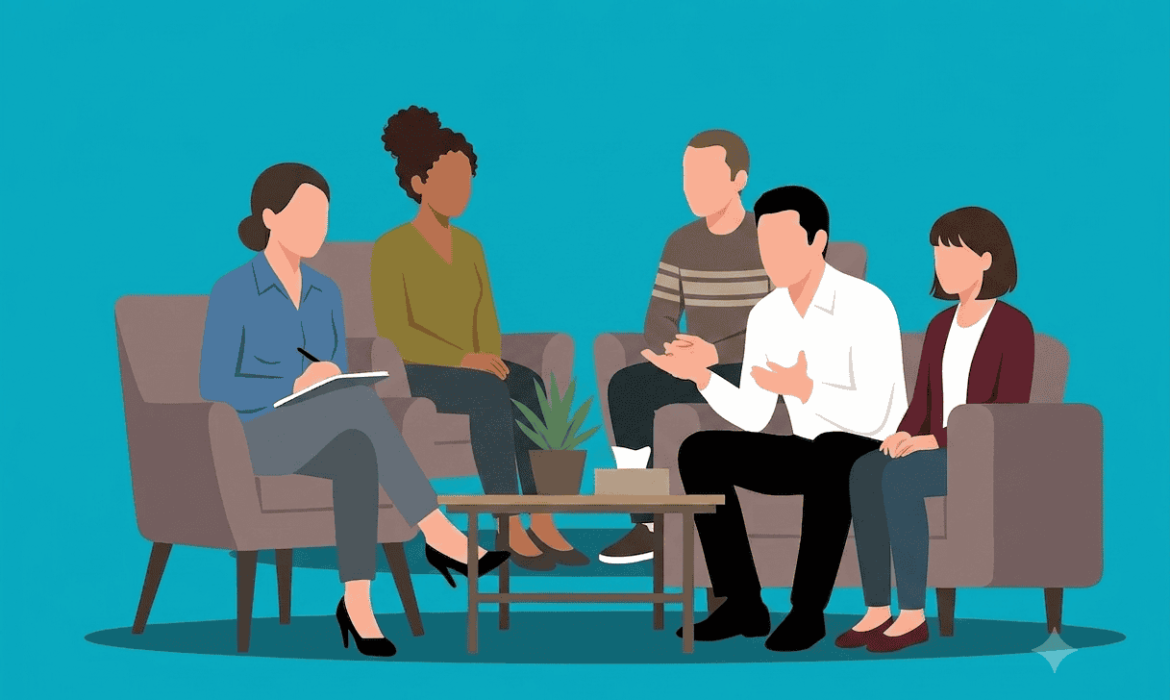
The Loneliness Effect: How Isolation Shapes Mental Health and Recovery
Some of the loneliest people I’ve met were never actually alone. They had coworkers, a full calendar, a house with other people in it. What they didn’t have was the sense that anyone really knew them, or would notice if they quietly fell apart. That gap, between being around people and feeling connected to them, does more damage to mental health than most of us realize.
We tend to treat loneliness as a mood, something to shake off. It’s closer to a health condition. And it sits underneath a lot of what people struggle with, including depression, anxiety, and the pull toward drinking or using to fill the space.
Loneliness is a health issue, not just a feeling
For a long time, loneliness was treated as a soft problem, real but not serious. The evidence says otherwise.
In 2025, the World Health Organization’s Commission on Social Connection reported that about one in six people worldwide are affected by loneliness, and that social disconnection is linked to an estimated 871,000 deaths every year.
The Commission placed social connection alongside physical and mental health as a basic pillar of wellbeing, not a nice extra.
The research on the body is just as striking. A widely cited 2015 meta-analysis by Julianne Holt-Lunstad and colleagues, published in Perspectives on Psychological Science, found that social isolation was associated with about a 29 percent higher risk of early death, and loneliness with about 26 percent, putting weak social ties in the same category as well-known health risks. Being disconnected doesn’t just feel bad. It measurably wears a person down.
How isolation and mental health feed each other
Loneliness and mental health problems run in a loop, and the loop is the dangerous part.
Depression and anxiety push people to withdraw. When you feel low, reaching out is exhausting, and you start to assume you’d be a burden. So you cancel plans, let texts sit, and pull back. That withdrawal brings a little short-term relief and a lot of long-term harm, because isolation feeds the very feelings that caused it. Fewer connections, darker thoughts, more pulling away. Around it goes.
The cruel twist is that the people who most need connection are often the least able to reach for it. By the time someone is deep in it, the muscle for reaching out has gone weak. That matters, because it means waiting for a lonely person to “just put themselves out there” usually doesn’t work. The pull is running in the other direction.
Why reaching out is often harder for men
This doesn’t land on everyone the same way. Many men, in particular, were raised to handle things privately and to treat needing people as a weakness. That training runs deep. It shows up as the guy who hasn’t had a real conversation with a friend in years, who equates coping with going silent, and who would sooner white-knuckle a hard season than say out loud that he’s struggling.
The numbers hint at the cost. The National Institute of Mental Health, drawing on 2022 data, found that only about 42 percent of men with a mental illness received treatment in the past year, compared with roughly 57 percent of women. Men aren’t struggling less. They’re reaching for help less. For a lot of men, connection has to be rebuilt on purpose, often in settings where it’s structured in rather than left to chance.
The link between loneliness and substance use
Here’s where it gets especially important. Loneliness and substance use are tangled together, each one feeding the other.
Alcohol and drugs are, among other things, a way to manage a feeling. For someone who’s isolated, they can numb the ache, fill an empty evening, or take the edge off social anxiety enough to get through a night. It works, briefly. Then it deepens the isolation, because using tends to pull people away from the relationships that might have helped, and shame finishes the job.
This is not a small or rare problem. SAMHSA’s 2023 national survey estimated that about 48.5 million Americans aged 12 and older had a substance use disorder that year. A great many of them are lonely, either because isolation helped drive the use or because the use burned through their connections. Often it’s both, in a cycle that’s hard to break from the inside.
Picture a man who moved across the country for a good job. The work went fine. But he left behind everyone who knew him, and building a new circle in your forties is harder than anyone admits. The evenings got quiet. A drink after work became three, then a nightly routine that was really about not sitting alone with himself. Nobody around him saw a problem, because nobody around him knew him well enough to see anything at all.
Why connection is part of the fix
If isolation makes things worse, connection is part of what makes them better. That’s not a greeting-card sentiment. It’s one of the more reliable findings in the whole field.
People with strong social ties tend to live longer, recover better, and weather stress with more resilience than people without them. Connection gives someone a hand to hold on a bad day, people who notice when they go quiet, and a reason to keep showing up. In recovery from anything, whether it’s depression, grief, or addiction, that web of other people is often what carries a person through the stretches where their own motivation runs out.
Connection does something quieter, too. It fights the story that you’re the only one, that your struggle is uniquely shameful, that nobody would understand. Sitting with people who’ve been where you are dissolves that story faster than any amount of solo effort.
What healthy connection actually looks like
Connection isn’t about having a big social circle or being the life of the party. Plenty of people with hundreds of contacts feel profoundly alone. What helps is being known, honestly, by at least a few people, and showing up for them in return.
For most people, that comes down to a few concrete things. Regular contact with people who feel safe. At least one relationship where you can be honest about how you’re actually doing. And some sense of being useful to someone else, because being needed is its own kind of anchor.
For a person rebuilding after addiction or a hard mental health stretch, the environment they live in matters enormously. Isolation is a major relapse risk, and going home to an empty apartment with no structure and no one checking in is a difficult place to heal. That’s part of why community-based recovery settings work as well as they do. A structured, peer-driven environment like a men’s recovery residence is built around daily connection and shared accountability, so people aren’t left to face the hardest stretch of recovery alone. The point was never the building. It’s the people in it, and the simple fact of not being isolated.
When and how to get help
If you recognize yourself in any of this, whether the loneliness, the low mood, or the drinking that’s quietly become a habit, it’s worth talking to a professional. You don’t have to be in crisis to deserve support, and you don’t have to climb out alone.
A good first step is reaching out to a doctor or a mental health provider, who can help sort out what’s going on and what would actually help. If substance use is part of the picture, an honest conversation with a treatment provider is a strong place to start. And if the isolation runs deep, know that connection is a skill that can be rebuilt, usually with help, one small and slightly uncomfortable step at a time.
If things ever feel unbearable, or you’re having thoughts of harming yourself, you don’t have to wait. You can reach the 988 Suicide & Crisis Lifeline any time by calling or texting 988. Reaching out in a hard moment isn’t weakness. It’s the exact opposite.
The part worth remembering
Loneliness is one of the most common and least talked-about forces behind poor mental health, and it hides well, because the people feeling it are usually the last to say so. The way out isn’t grand. It’s a few real connections, tended a little at a time, and the willingness to let someone see you before you’ve got it all figured out. That’s not a small thing. For a lot of people, it’s the whole thing.
Sources
- World Health Organization (WHO), Commission on Social Connection, Social connection linked to improved health and reduced risk of early death (30 June 2025) — about 1 in 6 people worldwide are affected by loneliness, which is linked to an estimated 871,000 deaths per year and raises the risk of depression, anxiety, and heart disease. https://www.who.int/news/item/30-06-2025-social-connection-linked-to-improved-heath-and-reduced-risk-of-early-death
- Holt-Lunstad J, Smith TB, Baker M, Harris T, Stephenson D. Loneliness and Social Isolation as Risk Factors for Mortality: A Meta-Analytic Review. Perspectives on Psychological Science, 2015 — social isolation was associated with a 29% increased risk of early death and loneliness with a 26% increased risk, comparable to well-established mortality risk factors. https://journals.sagepub.com/doi/full/10.1177/1745691614568352
- Substance Abuse and Mental Health Services Administration (SAMHSA), 2023 National Survey on Drug Use and Health — an estimated 48.5 million Americans aged 12+ (17.1%) had a substance use disorder in 2023. https://www.samhsa.gov/data/report/2023-nsduh-annual-national-report
- National Institute of Mental Health (NIMH), Mental Illness (2022 NSDUH data) — 41.6% of males with any mental illness received treatment in the past year, compared with 56.9% of females. https://www.nimh.nih.gov/health/statistics/mental-illness

